A Chat with Harry Hudson Taylor (21.07.25)
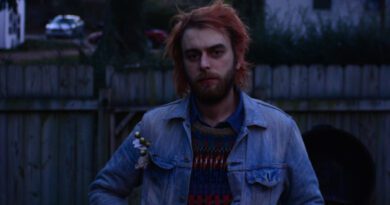
After over a decade captivating audiences as one half of the folk-pop duo Hudson Taylor, Harry Hudson Taylor steps into a more vulnerable, introspective chapter, this time under his own name. His debut solo release, ‘Dear You, It’s Me’, is a striking departure from the harmony-rich anthems fans may associate with his past work. We chat with Taylor as he opens up about navigating sobriety, creative rebirth, and the complexities of making music that reflects his truest self.
OSR: You’ve been part of the beloved duo Hudson Taylor for years. What were some key moments in your musical journey that led you to this solo chapter as Harry Hudson Taylor?
Taylor: Weirdly, I kind of already had a solo chapter that started before Hudson Taylor. I had a YouTube channel where I uploaded little odd songs, there was even a running joke with fans about my “solo career.” But I suppose the proper shift into this chapter began after our final Hudson Taylor gig in 2022. That was emotional. I needed time. And then I started writing again, slowly, quietly, for myself. What came out just didn’t sound like Hudson Taylor or Lady Bird Lad. It felt like something else. Something more reflective and raw. It felt like me.
OSR: How has your experience with harmony-rich songwriting in Hudson Taylor shaped or contrasted with the more introspective, self-produced direction you’re now taking?
Taylor: Yeah, harmony is always going to be an integral part of everything I do. I just love harmony, vocal harmony especially. I live and breathe it. I can’t help it, actually, a lot of the time. When I hear music in the world – whether it’s a car beeping its horn, a siren, or the humming of a fridge – I’m always harmonising with things. It’s almost like a tic I have. So it naturally makes its way into my music, whether I like it or not. I’ll always have bits of harmony, whether I’m doing it live, singing on my own stuff, or with other local musicians here in Berlin. Even in the more introspective stuff, there’ll still be other voices. Harmony’s not going anywhere.
OSR: ‘Dear You, It’s Me’ began as a private journal entry. What compelled you to turn something so personal into a public offering?
Taylor: It really goes back to the moment that I wrote the song. I was working in a café in Berlin – it was actually my first café job. I’d gone from being a teenager straight into Hudson Taylor, and that band was my job for 12 years. So, stepping into that job, I was a bit of a headless chicken. I didn’t know what I was doing. Bless the woman who was running the place; she was very patient with me. She used to play great hip-hop playlists during the day, and one afternoon on my break, I sat down with my journal and started writing. After a day of listening to 80–100 BPM hip-hop tracks, that rhythm really got into my head. So I started writing this diary entry with that meter in mind, and that’s kind of where it was born. Because I already had the rhythm in the background, I thought, “This could turn into a song.” It came out in a stream of consciousness, maybe 10 or 20 minutes long, and that’s basically what became the final song. I could have made it shorter, more hooky, more punchy, repeated the “Dear you, it’s me” refrain a bit more, but I wanted to stick to what came out in the moment. It felt like a download, and I wanted to offer it exactly the way it came.
OSR: You described the track as “quietly cinematic.” How did you approach blending spoken word with ambient textures to achieve that atmosphere?
Taylor: My first instinct with the track was these Irish, Celtic-y sounds I was hearing in my head. After that work shift, I went home and recorded the vocals in one flow. I felt this rhythm, this natural pulse, and it reminded me of a bodhrán – a traditional Irish drum. At first, I looked on YouTube for bodhrán samples and found one I used in the demo. But eventually, I asked Dermy from Hermitage Green to play on it, and that really became a signature sound for the track. At one point, I thought I’d maybe keep it really stripped back – just vocals and bodhrán, maybe some guitar or piano. But then I kind of went down a rabbit hole with the production. In the end, I just had fun painting on it. Maybe I went a little overkill, but I had a lot of fun doing it.
OSR: You’ve self-produced and mixed this track entirely. How did doing everything yourself shape the emotional fidelity of the final piece?
Taylor: It can be hard wearing so many hats. You’ve got the artist-musician hat, the performer hat, the producer hat, the mixer hat – and they’re all completely different ways of looking at a piece of music. This was the first song I’ve taken all the way through from writing to recording to mixing myself. Of course, I leaned on the support of friends and mentors. Dave O’Brien, who used to be the monitor engineer for Hudson Taylor, was great to bounce mixes off. Brian Speaker, whom I co-produced Lady Bird Lad with, gave feedback too. But yeah, it was a challenge, especially because this was spoken word, and I’m used to making sung music. That’s part of why I wanted to release an instrumental version too, to give the instruments and arrangement some space to breathe.
OSR: Berlin plays a visual role in the accompanying film. How has the city influenced your solo work, creatively or personally?
Taylor: Berlin gave me space to slow down. There’s something about the city – it doesn’t care who you are. You can disappear a bit. That helped me go deeper. I started doing open mics again, just to get things moving, test stuff out. It made me braver. Less precious. More real.
OSR: The short film ends with a wordless embrace between you and an older man. Can you share the symbolism behind that final moment?
Taylor: Yeah, the film came together really spontaneously. I knew I wanted to release the song on my birthday, and about six weeks before, I bumped into my friend Shawn Fitzgerald, an amazing director and choreographer. He said he’d be up for doing a video, but we had very limited time. We ended up shooting it the next day. I came up with the idea of it being a simple journey – an average day walking through Berlin, past places I like in Kreuzberg and Neukölln. The man in the video is Wayne, an awesome Texan guy I met here. He actually lives right next to Viktoriapark, where we filmed the last scene. For me, that final moment is a reflection of how important mentorship has been to me, especially in my journey getting sober. I have a sponsor, or mentor, who’s helped guide me through it. In the video, Wayne represents that person, that safe energy. There’s another layer too: the song comes out on July 21st, which is my 33rd birthday, and also the sixth anniversary of the day I stopped drinking. So there’s personal meaning layered into all of it.
OSR: This release differs from your earlier work with Hudson Taylor and Lady Bird Lad. What freedoms or challenges have come with stepping further into introspective, experimental forms?
Taylor: There’s this kind of weird dance you do when you’re using your actual name – your birth name – as an artist. It’s the same name you use to pay bills, rent, and taxes. It’s domestic. With Lady Bird Lad, I got to take myself a bit less seriously. It was “my art project” instead of “me.” Coming back to something under my own name has felt more personal. And it’s kind of paradoxical, because this song, ‘Dear You, It’s Me’, is really about ego deconstruction. It’s about letting go of who you think you are, connecting to something deeper, to awareness, to the infinite. So releasing it under my name was definitely a trip. That said, there is a kind of freedom in it. There’s already some brand recognition from Hudson Taylor, so I’m not having to build something from scratch the way I did with Lady Bird Lad.
OSR: You chose to release an instrumental version too. What do you imagine people doing or feeling while listening to that space?
Taylor: Yeah, so with all the work I put into the production, I felt like some of the instrumental parts – like the violin, the piano, even the choir of non-lyrical backing vocals from Seraphina Taylor – didn’t get their time to shine in the vocal version. I wanted a version where people could really hear all that. I also liked the idea of giving people something instrumental to sit with, something without words. That ties in with the lyric at the end of the song: “Words fall short. They can only ever be a signpost at best.” I’m trying to describe something that’s ultimately indescribable – the infinite, the ineffable – and the instrumental version carries that, or at least tries to. Also, I love the idea that maybe someone will write their own piece over it- a poem, a song. That would be really cool.
OSR: If this track were the start of a larger body of work, where would the next chapter take us?
Taylor: The next chapter isn’t going to be another spoken-word piece like this one. I’m not sure when or if I’ll come back around to this kind of thing. ‘Dear You, It’s Me’ is the wild card launchpad for this next journey of music-making. The next releases will be songs, mostly electric guitar–led, with one or two piano ones thrown in for good measure.
Many thanks to Harry Hudson Taylor for speaking with us. Find out more about Harry Hudson Taylor on his official website, Patreon, Instagram, X (formerly Twitter) and Spotify.