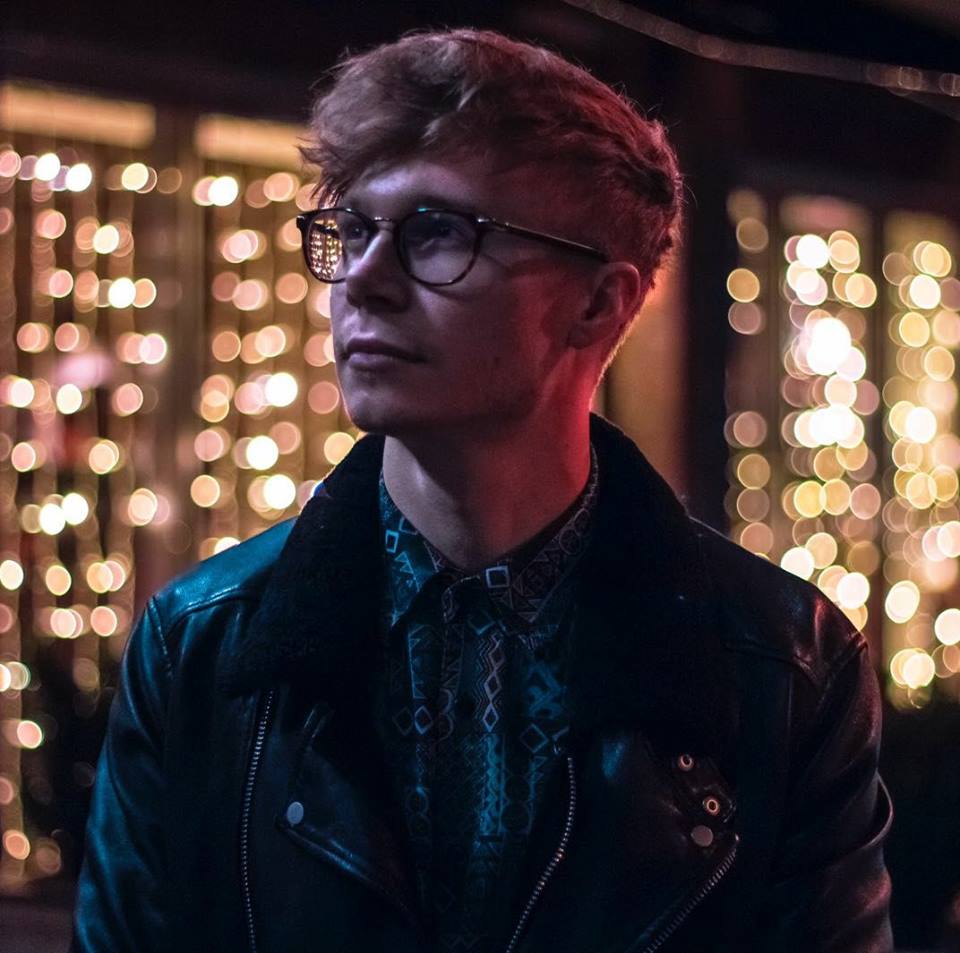
A Chat with Jeeves (29.07.25)
Jeeves is an artist unafraid to dive deep, both musically and emotionally, blending raw vulnerability with cinematic ambition. With influences that span from A.R. Rahman to Daft Punk, and a voice shaped across cities like LA, London, and Nashville, his new single ‘Where Did All The Good Men Go?’ invites listeners on a confessional, genre-blurring journey through healing, heartbreak, and hope. We speak with Jeeves about the new single, musical influences, and much more.
OSR: Your sound has drawn comparisons to Ed Sheeran, Jon Bellion, and Lizzy McAlpine. Who were your earliest musical influences growing up?
Jeeves: A.R. Rahman, Led Zeppelin, and Eric Clapton. To my surprise, there’s this artist from San Diego, Jason Mraz, whose avocado farm added guacamole to both my Chipotle and my songwriting. I began by scatting and imitating ‘I’m Yours’, and the first concert I ever saw was Love is a Four Letter Word in Berkeley, CA. I started winning singing competitions by singing ‘The A-Team’ by Ed Sheeran, and then we learned how to play all of John Mayer’s songs on guitar. In Jeeves lore, they might be a holy trinity for unknown reasons. I’m always open, and I listen to music in every language, and my friend Joe always reminds me with love that genres are not real: Ravel, Bill Evans, Juanes, BB King, Clapton, SRV, Sinatra, Juan Luis Guerra, Dolly Parton, Elton John, Piccioni, Andrea Bocelli, Daft Punk, Beatles, Joni Mitchell, Bon Iver, Ólafur Arnalds, ABBA, The Mamas and Papas, Fleetwood Mac, Justin Timberlake, Quincy Jones, Pharell, Timbaland, Ben Böhmer, Zedd – off the dome.
OSR: The production on ‘Where Did All The Good Men Go?’ is rich but restrained. What was your vision sonically when entering the studio?
Jeeves: Thanks for noticing! It’s important not to show off and let the message speak for itself. I knew I wanted to invite the listener to admit something they’ve been hiding from themselves. How do you do that sonically? How do you make it sound like a confession? How do you avoid preaching? How do you be warm, honest, and intimate? I knew we needed to create a journey through trauma, exploration, overwhelm, and acceptance. I love orchestral arrangements, so the strings pull you into the dream, and the guitar and my voice alone make it honest. Charles was the missing puzzle piece, who gave the song grit, tastefully distorted electric guitars, and synths and soundscapes only he could dream of to make the track a show-stopper. A good song can be reimagined in many ways. I play this alone with a piano and a lit candle, acoustic with my guitar, full-band like the original, free of time rubato with a jazz-trio, and now I’m working on an acapella version with a men’s octet.
OSR: You wrote the song years ago. Did the arrangement or lyrics evolve significantly before release?
Jeeves: Yes. Lyrically, I wrote from various different perspectives of people I love in my life. I let it breathe until I finally made the decision that I would write from my own personal experience only, and that I would write about my yearning to see positive role models and my own unresolved trauma, while leaving room and space for others to insert themselves into the universality of my pain. Musically, I always thought this was a piano song and that the main melody I sing in the chorus was something I mirrored with these lush chords and suspensions that capture the pain of the song. I played it live in Los Angeles with a string quartet and knew that that piece of the puzzle was solved. Then, I ran into Charles Myers, and he knew that this song needed a groove and something to hypnotise us and put us in a trance. We played around while I sang, and he accidentally stumbled upon this lick on his guitar, and we fell in love with the motif. That’s the beauty of collaboration and openness. You can have a vision, but you need to stay open. The song went on a journey with me, and its compass brought these amazing people into my life, the people the song was meant to attract and find! There’s so much beauty in that: the people a song brings into your life.
OSR: What does your songwriting process usually look like? Pen and guitar? Voice notes?
Jeeves: My friend Linsday always reminds me to “stay a curious kitty”, so I do what I need to follow a thread – whatever it takes. For ‘Where Did All The Good Men Go?’, the melody and lyrics came to me at the same time while I was crying in the shower. A shower is a great place for songwriting. I’m a multi-instrumentalist and a producer, so sometimes it’s a beautiful melody on piano or guitar, grooving drums, a vocal idea, or a lyric that feels like poetry that I’ll scribble onto a notebook I carry with me everywhere. You need to be ready when inspiration strikes, and I’m inspired every day, every hour, every minute! It’s a celebration that I’m being bombarded by life’s beauty and using whatever tools I have to capture it. And yes, we need tactile feedback. I have my fountain pen, and I will pretend I’m writing poetry, because I am. Songs are poetry in motion!
OSR: What was it like working with Grammy-nominated producer Charles Myers?
Jeeves: A dream come true. He’s toured with Ed Sheeran and John Mayer, and his Grammy nomination above the piano. John Mayer’s setlist on the wall assures you that you’re in the right place. Creative match made in heaven. Also, fun fact: I saw Charles open for John Mayer at the Chase Centre in 2023 before I even knew who he was. How funny that I was staring at my producer on stage that day, wondering if I’d ever make great songs or what this music career has in store for me. Charles will be one of the world’s best producers; he already is. There’s too much going on in his creative mind – he also has a great interest in analogue film photography. His perception, his taste, and the way he feels frequencies is not limited to audio. He’s playing with the best musicians in the world and the biggest arenas in the world. When we arrange, we’re thinking about how each part comes together like a puzzle that serves the whole and how it might look and feel on stage.
Charles’ is also my gateway drug into Nashville, and he’s changing me more than I care to admit, challenging me, and pulling me into a different sonic universe. He’s making me a better man, a better artist, and bringing out different palettes for us to paint with. The canvas is bigger. Nashville is a breath of fresh air, and I know it’s time to let go of whoever I thought I was or can be… whatever, he musically understands “me”. I’m so happy he exists, that he’s a great friend, as it’s an unavoidable fact that we become close with whom we make art. He’s a brother now, and I’ll take a bullet for him.
OSR: How do you balance lyrical intimacy with broad emotional appeal in your music?
Jeeves: I’m never concerned with broad emotional appeals, so that helps, but my music becomes universal. I suspect the reason would be that I try to be ultra-specific and honest about what I need to say, what I’m afraid to say, and reveal what’s in my heart. When artists do that, then the whole world will feel you because we’re human, and everything we feel is not unique to us. We are never alone, and our humanity and range of what we feel haven’t changed since the dawn of time. It’s the oldest truth that exists, and why art from centuries ago can speak to someone in modern times. Also, to quote Tolstoy, “Art is a means of communion among people”. I prioritise lyrical intimacy because the function of my art is self-transcendence, and my life’s work is to connect and intimately know the whole world and to be one with everyone in it.
OSR: You’ve lived and worked in New York, LA, Nashville, London, and Stockholm. How have those environments shaped your artistic voice?
Jeeves: Well, one thing for certain: I don’t hold any fixed identity of “who I am” or let that stop me from self-expression. I let the places flow through me and expand into something global as all artists do.
LA: my songwriting has become visual; I write like a director, and I see the movie in my mind. I love Hollywood, I love LA, and often dream of my home in Malibu.
NYC: my friend Haley gave me a beautiful gift, Just Kids by Patti Smith, and so I began wandering into the Hotel Chelsea and seeing myself as a NYC songwriter. Also, Richie Cannata played sax with Billy Joel at Madison Square Garden when they sold out twelve times and world tour for the Beach Boys, so the history of NYC is bleeding into my records.
Nashville: a violin becomes a fiddle and cries, where the blues is alive and well, where lyrics and songwriters are sacred, the guitar playing is world-class, the craft is strong, the whiskey stronger, and I feel the need to purchase my leather boots. The instrumentation is timeless.
London: Alfred George Hole, Alfie, pulled into the UK countryside. We found folks who worked at Abbey Road for the last two decades on Harry Potter movies, Marvel movies, Amy Winehouse, and the Beatles, so we had a cinematic touch to our orchestra that we recorded. We hope you hear the sound of the Ministry of Magic on the record.
Stockholm: make friends with a kind Swedish man with a black Labrador named “Léon” to go on walks with you in the morning in Djurgården, to teach you how to not be rude in Europe, point out the American ambassador’s home if you’re homesick, and the hotel where Max Martin invites everyone to make hit records for the world. We always need iconic synths and ABBA whispering in your ear.
OSR: How did recording your debut EP Live at Cove City help prepare you for Now or Never?
Jeeves: I love the spirit of your question, and you’re right, that the work we do prior prepares us in ways we never expect and that we only come to respect in hindsight. Playfully, I might add that my spirit and energy is to always put myself in situations where I’m unprepared, my entire life is on the line, and a fearless attitude of “Now or Never”. The EP was bold: one-take-per-song on video, all of my life savings on the line, never recorded in a studio before in my life, and never rehearsed the songs with all sections together until that day. What a miracle that it wasn’t a disaster. Rather than obsessing over every detail and being a perfectionist, I learned that imperfection is beauty – Japanese wabi-sabi baby. I used to compose, produce, and arrange every single note that everyone needed to play for my songs; that day, I trusted what everybody had to contribute. I killed my ego. Rather than looking for everything that I did wrong that day, I started appreciating what others did that I could never have planned out, and I listen to it now with deep gratitude for who they are and how they brought all of who they were to make my art better. There are also no redos in life; we need to do the best we can that day, and it’s always now or never; what we do lasts forever. We learn, grow, and evolve, and it made me bolder. Bold enough to leave home, travel around the world with nothing but a suitcase, some songs, a guitar, a notebook, a fountain pen, and a dream.
OSR: What’s one unexpected influence, musical or non-musical, that shaped this track?
Jeeves: Marilyn Monroe and Carl Jung. “How can I be substantial if I do not cast a shadow? I must have a dark side also if I am to be whole.” – Modern Man in Search of Soul. Marilyn Monroe, “I am good, but not an angel. I do sin, but I am not the devil”. We all possess light and a shadow. We are all capable of good and evil. ‘Where Did All The Good Men Go?’ speaks to the pain of men turning to darkness, and our need to see them step into the light and be a source of light for everyone around them who loves them.
OSR: Is there a lyric in this song you’re particularly proud of? Why?
Jeeves: “Will all the fathers, mothers, sons, and daughters, call me naive? Will you hold my disbelief and give something else to believe in… it’s not my fault but the waves keep crashing over me”, it puts my heart on my sleeve, it reveals the fear of being vulnerable, a willingness to be wrong, and looks and smells like “Trauma” with a capital T with “it’s not my fault but the waves keep crashing over me”. I’m giving a part of myself away in not-so-secret terms, but we are also so much more than our scars. I’m happy to say I’m in a happy place, and the song has healed me in more ways than one. May it do the same for others now, and let’s invite joy into our lives after we cry it out.
Many thanks to Jeeves for speaking with us. Find out more about Jeeves on his Instagram, X (formerly Twitter), TikTok, and Spotify.