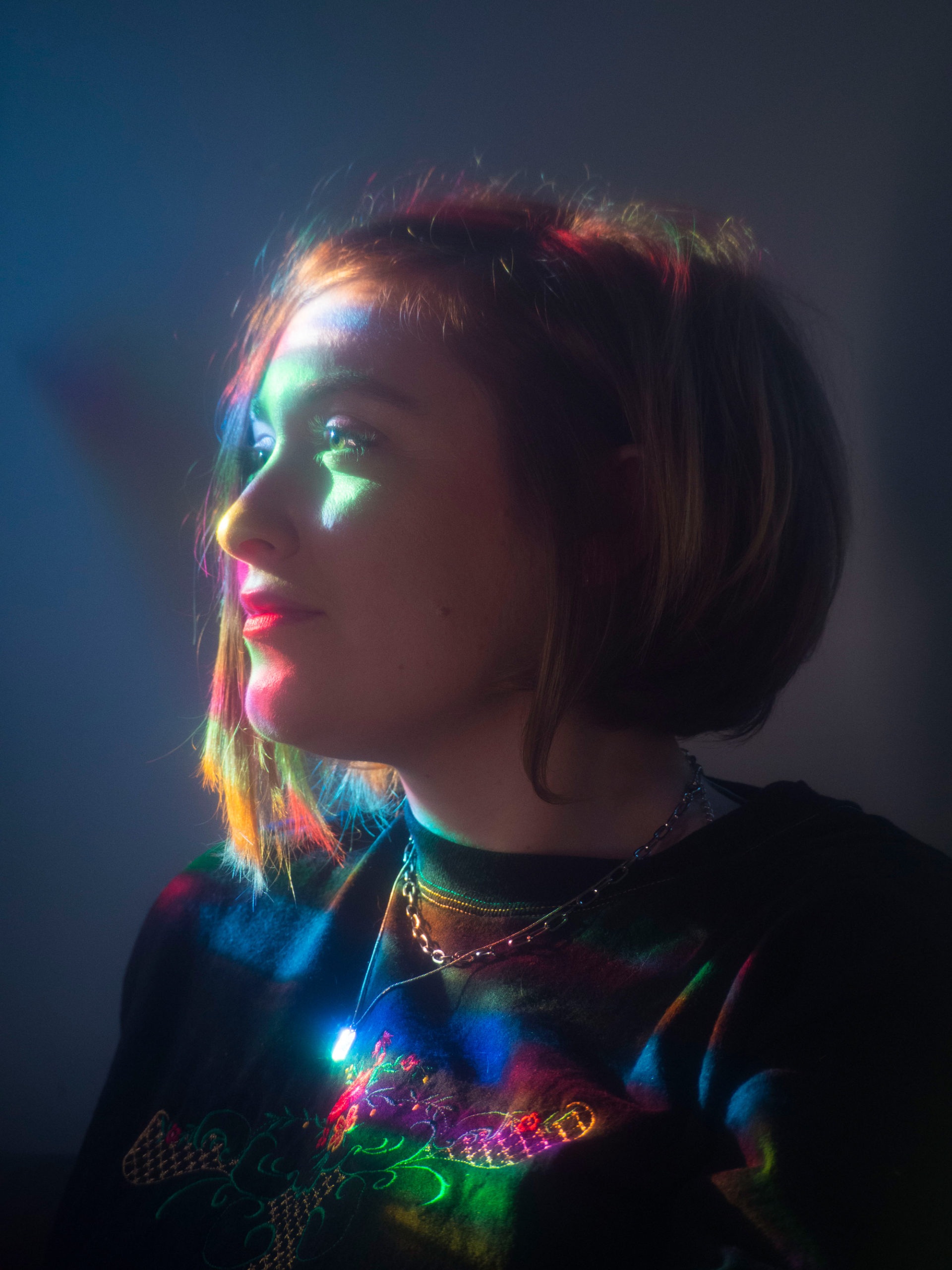
A Chat with Sam Uctas (10.10.25)
London-based multi-instrumentalist and songwriter Sam Uctas has released his uncompromising new album, The Dark Made Sense. A record that strips music back to its essence: raw, unrefined, distorted, noisy, and deeply human. We chat with Sam Uctas about the release and more below.
OSR: Can you walk us through the creative process behind The Dark Made Sense?
Sam Uctas: I spent four months writing for the album. I was reading constantly. Bukowski, Hemingway, William S Burroughs, Kerouac, Christopher Hitchens, Gore Vidal… and I only listened to classical music in this period. It helped to keep my thoughts and ideas free. I played guitar for hours every evening. Mostly just jamming with a looper pedal. The songs would spawn from these sessions. I recorded demos early this year to get the drum programming done and work out the instrumental arrangements. Then I recorded the whole album over a five-month period. I went through stretches of very low motivation, questioning the point of continuing. 2 am, alone, drinking vermouth, listening to a half-finished song for the 1000th time… Then other times, I would have manic productivity. Dancing in the studio. Everything effortless. Guitar solos in one take. Songs recorded in one weekend. These moments were rare.
OSR: What inspired the decision to record every element yourself, from instrumentation to production?
Sam Uctas: I just liked the idea of being able to listen to an album from start to finish, knowing it’s the work of one person. I can’t think of many other albums where you can get that experience. Stuff like Niandra Lades by John Frusciante. I think it gives the listener a much more direct and personal relationship with the artist. With other art forms, it’s obviously much more common to get this feeling. When you look at a Van Gogh painting, it’s just you, the art and Van Gogh. A three-way relationship, and I think that is perfect.
OSR: How does your multi-instrumentalist background inform your songwriting and production choices?
Sam Uctas: Songwriting is done 100% on guitar. I really think of myself as a guitarist above everything else. I’m more comfortable playing guitar than I am talking. On the production side, it really depends on what vibe I want the song to have. I’ll use my limited ability on keys, bass & drum machines to match it. But it’s so important not to just add instruments in because I can, only if the song needs it. Every element should have its place and not muddy the song.
OSR: Did writing and recording alone change the way you perceive your own songs?
Sam Uctas: Yeah, the songs become extremely personal. They are as much a part of me as my skin. I have lived with them through every stage of the creative process, and see them as a living and breathing thing. When I listen to them, it doesn’t really feel like I recorded them. It is slightly surreal. Being the only person working on an album will make you go crazy, obsessed and manic, though. But as Bukowski said:
And remember the old dogs
who fought so well: Hemingway, Celine, Dostoevsky, Hamsun.
If you think they didn’t go crazy
in tiny rooms
just like you’re doing now
without women
without food
without hope
then you’re not ready.
OSR: Did working primarily with analogue equipment affect how the songs developed?
Sam Uctas: Yeah, for sure. They add so many limiting factors. But through this, you are forced to keep everything stripped back and essential. I’ve been guilty before of trying to get as many audio tracks into one project as I can, thinking a song with 100 tracks is better than a song with 10. But, you know, when I listen to stuff like The Velvet Underground, Ramones, or old rock and roll records, it’s the simplicity and directness that make them perfect.
OSR: How do you approach lyrics? Do they come first, or are they shaped by the music?
Sam Uctas: I don’t have a set formula for songwriting. The songs just kinda fall on my head, and I’m just trying to catch them. Sometimes poems turn to songs, sometimes I just start with the song title, sometimes I write the lyrics and guitar parts together. On this album, I really tried to focus on storytelling. I was sick of just writing about myself; I’m a pretty boring subject matter. I wanted to create some characters and just write about them.
OSR: Were there any external influences, musical or literary, that shaped this album?
Sam Uctas: Hemingway was a big influence on this album. I love his Iceberg Theory, the idea that omitting detail gives space for the reader’s imagination. And I wanted to try that technique on my songs. So the tracks on the album are pretty sparse, and I tried to keep song arrangements simple. Room to breathe and think. Musically, the album is rooted in art rock and post-punk. I guess I was taking my cues from Velvet Underground, Lou Reed, PIL, Bauhaus, and Gang of Four. That kinda stuff. But I wasn’t trying to emulate; rather, to add my own sound to the genre.
OSR: What’s the significance of the album title, The Dark Made Sense?
Sam Uctas: The Dark Made Sense is about embracing the bad times, the loneliness, the sacrifices, the heartache. Realising that the dark is needed for the light. Lean in to it. It will all eventually work out. It’s all happening for a reason.
OSR: How does The Dark Made Sense differ from your previous releases in terms of sound and approach?
Sam Uctas: For The Dark Made Sense, most of the tracks are really rooted in the drum and bass. They really drive it; the guitar is there to add flavour. I used a LinnDrum for most of the drums, and bass is mostly a Jazz bass into a Blues Jr. amp, although some of it is direct into the tape machine. It gives the music a more powerful feeling compared to my older material, which is much more guitar-driven.
OSR: If listeners take away one thing from this album, what would you want it to be?
Sam Uctas: I hope it inspires them to create. It’s the best thing in the world.
Many thanks to Sam Uctas for speaking with us. Find out more about Sam Uctas on his Instagram and Spotify.