A Chat with Visa Anxiety (25.11.25)
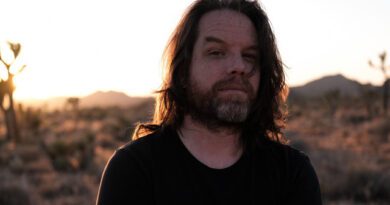
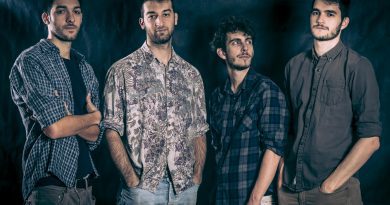
Led by singer-songwriter Emilio Wang, Visa Anxiety is a band conceived of late-night jam sessions and existential musings. We speak with Wang about their new album, meeting of diverse cultures, what music means to him, and much more.
OSR: One of the most intriguing aspects of Visa Anxiety is the cross-cultural element. Chinese culture is so strikingly different to UK culture; how do you feel you have entwined the diversity in your music?
Wang: Growing up in China and then relocating to the UK has deeply shaped the way I experience and create music. There is a constant sense of contrast – discipline versus freedom, tradition versus rebellion, collectivism versus individuality – and that tension appears throughout Visa Anxiety’s sound and identity.
Rather than trying to “blend” the two cultures neatly, I allow the friction between them to exist. That friction informs my songwriting, my sense of melody, and even the emotional tone of the music. The British indie scene gave me the language of vulnerability and rawness, while my Chinese background remains present in the emotional restraint, the observation, and the sense of displacement. Visa Anxiety is, for me, not just a band name, but a representation of living between worlds — culturally, emotionally, and artistically.
OSR: How does the meeting of different cultures influence your songwriting, production, music videos, and possibly performances?
Wang: It influences everything.
In songwriting, the themes often revolve around distance, belonging, identity, and the idea of “home” – not in a literal sense, but as something psychological and fluid. My melodies tend to balance Western pop structures with a more introspective, sometimes melancholic, Eastern sensibility.
From a production perspective, I’m drawn to contrasts: organic instruments meeting electronic textures, minimalism alongside emotional density. That approach is probably shaped by living between two cultures that communicate and express very differently.
In music videos and live performances, I am increasingly interested in visual storytelling – symbolism, isolation, movement, and space. These are things that come from a very personal place of experiencing the world as someone who is both inside and outside the culture at the same time
OSR: What can you tell us about your album, What Can I Get For You? Is there a particular backstory or theme to it?
Wang: The title What Can I Get For You? actually comes directly from my experience working as a bartender at The Cavern Club in Liverpool. It was the sentence I repeated hundreds of times every night.
At first it was just a phrase, but over time it became symbolic. It started to represent service, expectation, survival, performance, identity, and the idea of constantly asking the world – or being asked – to provide, to give, to approve.
The album explores that psychological space: what people want from you, what you’re willing to give, and what you lose in the process. It’s about migration, emotional labour, longing, self-worth, and the quiet anxiety of trying to belong somewhere new. In that sense, it is deeply personal but also very universal.
OSR: What is your creative process?
Wang: My process usually begins with an emotion rather than a technical idea. I’ll sit with a feeling – loneliness, nostalgia, anxiety, hope, discomfort – and try to find the sound that matches it. Sometimes that becomes a melody first, sometimes a chord progression, sometimes just a voice note on my phone at 3am. From there I build the world of the song: the atmosphere, the pacing, the textures, the lyrics.
Because I also work in film composition, I naturally think in terms of scenes, colours and environments. I’m less interested in making “a good song” than I am in creating an emotional landscape someone can step into.
OSR: Which is more challenging: lyrics or melody?
Wang: Lyrics, without question. Melody feels instinctive to me. It’s emotional, physical, and almost subconscious. Lyrics, on the other hand, require clarity, honesty, and courage. English is not my first language, so writing lyrics becomes an act of vulnerability. Every word feels like a decision about who I am and how I want to be understood. But in a way, that challenge is what makes it meaningful.
OSR: What does music mean to you?
Wang: Music is how I process the world. It is a place where confusion becomes clarity, where pain becomes meaning, and where identity becomes something fluid instead of fixed. For someone who grew up between different systems, languages and expectations, music became the only space where I felt truly free and whole. It is my memory, my future, my rebellion, and my peace.
OSR: What do you hope people take from What Can I Get For You?, and what is its significance to the band?
Wang: I hope people feel seen. Even if they don’t fully understand the lyrics or my story, I want them to feel that sense of displacement, longing, hope and quiet resilience. The album is not only about being an immigrant or a musician, it’s about being human in a world that constantly shifts beneath you.
For Visa Anxiety, this album represents a statement of identity. It is the moment where the band stops trying to imitate the world and finally starts to speak in its own voice.
OSR: You released music videos for ‘Life Is Worth It’ and ‘Closed Eyes’. What was that experience like, and did you learn anything from the process?
Wang: Creating those videos showed me the power of visual storytelling. I learned how much imagery can deepen a song’s emotional impact. It also made me more aware of my role not just as a musician, but as a creator of worlds. Everything – color, movement, light, framing – becomes part of the narrative. It’s something I want to explore much further in future projects, especially in relation to live performances and immersive environments.
OSR: What can we expect from Visa Anxiety in the future?
Wang: More clarity, more confidence, and more experimentation. Musically, the next stage will lean into bolder production, deeper emotional themes and stronger visual identity. On a professional level, I’m also working towards expanding my presence in both the UK and international music scenes through collaborations, scoring projects and live performances.
Visa Anxiety is not just a band. It’s a long-term artistic project.
OSR: Do you have a message for our readers?
Wang: If you feel like you don’t fully belong anywhere, you’re not alone. That feeling can be painful, but it can also be powerful. It can be the starting point of creation. Don’t wait to feel “ready” or “accepted”. Create anyway. Your voice already matters.
Find out more about Visa Anxiety on their official website, Instagram, TikTok, YouTube and Spotify.
This artist was sent to us by Steaming Kettle PR.