A Chat with Irène Schrader (25.11.25)
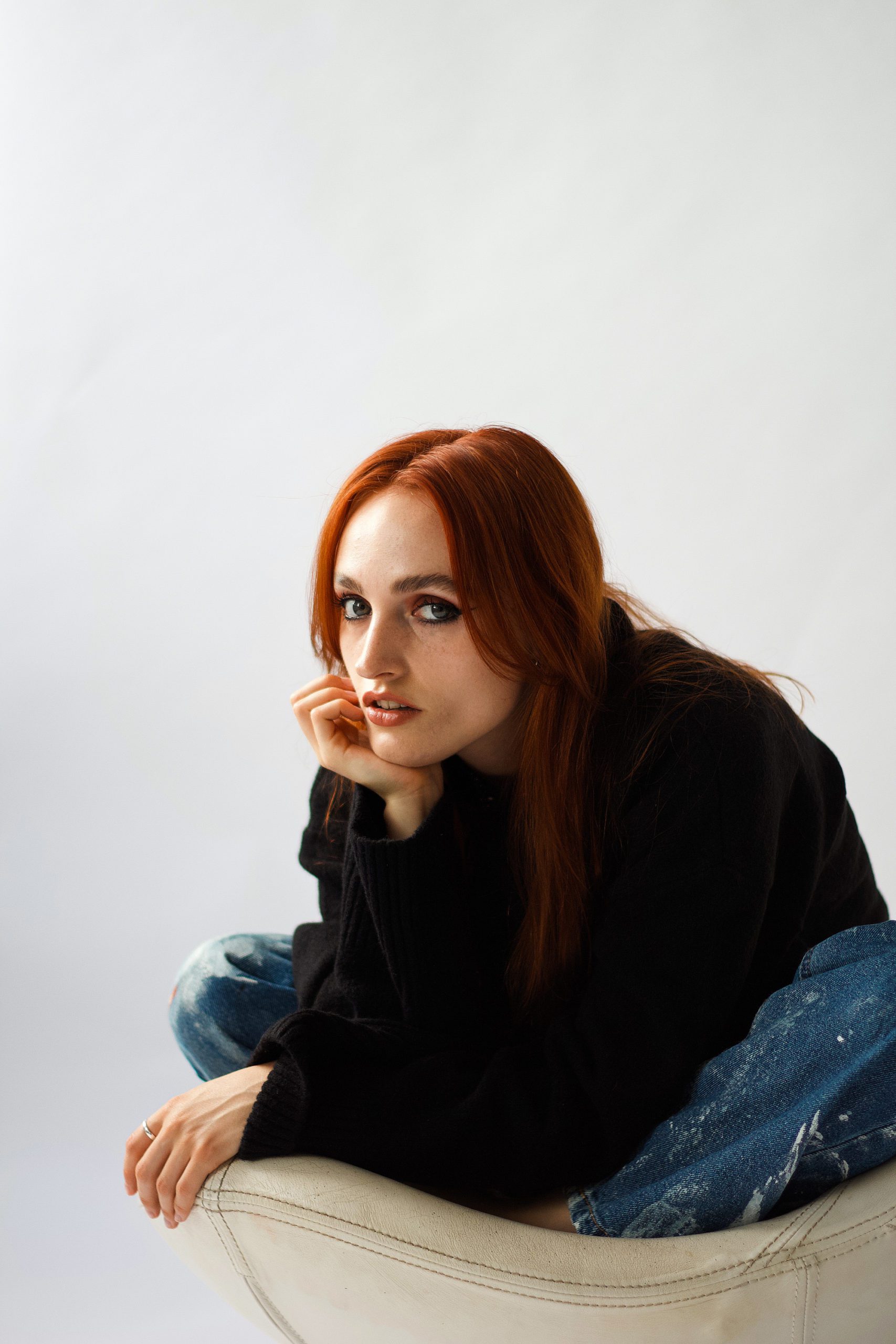
Multilingual singer-songwriter Irène Schrader unveils her highly anticipated trilingual EP, ECLIPSE. An introspective body of work that transcends borders, languages, and sonic boundaries. Blending English, French, and Mandarin, Schrader invites listeners into her universe, a luminous and melancholic space where love, change, and identity orbit one another. We chat with Irène Schrader about all things music below.
OSR: What inspired the concept and title of your latest EP?
Schrader: Other than the songs’ frequent references to space, I felt that an eclipse was a fitting way to describe the confusion and transitional phase that I was going through while writing the EP, just as one celestial body moves into the shadow of another. While I have not yet experienced an eclipse, the imagery I have in my mind of it connects well with a sense of temporary confusion and change.
OSR: How did blending English, French, and Mandarin shape the storytelling in your music?
Schrader: The languages I speak in my daily life show different facets of my personality, and the impulse to show that within my music felt quite natural. Obviously, I am still only one person, and the way I use language in general carries a similar energy. However, if I were to describe it simply, English is the language in which I express myself the most earnestly, French gives me a more decorative tone, and Chinese carries a softer and more indirect quality.
OSR: Which track was the most challenging to write or record?
Schrader: ‘Cosmos’ was the most challenging song to write because it is the only track from the EP that I did not begin composing on my own. Sebastien Chialli, my long-time collaborator, sent me the instrumental production he had created, and I needed to find a theme that felt meaningful to my life while shaping a structure that fit his composition. I usually write my songs alone, so this became an enjoyable exercise and a new way to approach my writing process.
OSR: How does travel and living in multiple places influence your songwriting?
Schrader: It is definitely easier to feel as if you move through different, distinct chapters of life when you move frequently. Aside from the life experiences that naturally came with my travels, meeting people, and facing circumstances that come with not being truly anchored anywhere, I would say that growing up in a mosaic of musical influences definitely affected my songwriting. For instance, I feel as though my parents’ vastly different cultural backgrounds helped me find a style that felt more or less unique to me.
OSR: What role do personal experiences play in shaping the themes of your music?
Schrader: The fact that I use my real name as my musical persona reveals a great deal about the important role that personal experiences play in shaping the themes of my music. All of my songs are drawn from moments I went through or witnessed. Some of them are less directly personal than others, such as ‘2062’, which was inspired by the desperation I felt in response to the current events of 2022.
OSR: Which producers or collaborators on this project had the biggest impact on the sound?
Schrader: Sebastien has definitely had the biggest impact on the sound of this project, as we have been working together for several years. We began collaborating when I was about 19, and he has taught me a great deal about my sound. I feel very fortunate to have him on my team.
OSR: How do you balance vulnerability and musical sophistication in your work?
Schrader: I don’t know if I would describe my music as sophisticated, but I think that is something that will come with continuous experimentation and time, which I now have more of. Vulnerability is what drew me to songwriting in the first place, so that remains a must.
OSR: Is there a particular lyric or line that holds special significance for you?
Schrader: The first one that comes to mind is: “There are stories that I’m still too afraid to tell because I don’t want them to be true.” It expresses the vulnerability I feel when writing songs that could potentially be heard by the people they are about, as well as the fear women experience when telling stories of abuse.
OSR: How do visuals, such as music videos, enhance the narrative of your songs?
Schrader: Especially nowadays, visuals and overall artistic direction are essential for a musical world. I hope that, as I am able to secure even more budget in the future, I will be able to invest further in my visuals for future projects. I have been learning to have fun with music videos, as I can both embody a song as one would a fictional character and/or paint a picture of how I felt while writing it. This EP features two music videos: one for ‘2062’, shot and directed by Lujza Zhang, in which I portray an alter ego of a time traveller going back in time to look for someone she holds dear. The other, ‘Nomade 游牧’ (to be released this December), shot by Tiphaine Hocquinghem and directed by Jade-Salomé Zivie, tells a simpler story about finding familiarity in a new city. I am also very happy with the cover photo of the EP, shot by Márk Horváth, which represents an eclipse. We had so much fun conceptualizing it together, and I am extremely grateful to the talented designer Nandin Erden, who lent me her dreamy clothes.
OSR: What do you hope listeners take away from this EP?
Schrader: I hope that listeners can appreciate the EP, even if some of the songs are in languages they do not understand. I also want to become part of this new diasporic wave of singer-songwriters who share their cultures through music.
Many thanks to Irène Schrader for speaking with us. Find out more about Irène Schrader on her Instagram and Spotify.