A Chat with Bobby Freemont (18.03.26)
Bobby Freemont is fast emerging as a compelling new voice in indie music, blending cinematic soundscapes with deeply personal storytelling. We chat with him as he reflects on grief, memory, and the creative instincts behind his latest release, ‘Clementine Skies’. From experimental production choices to emotional authenticity, Freemont offers a candid look into the artistry shaping his evolving solo work.
OSR: What was the inspiration behind ‘Clementine Skies’, and how did your grandfather’s passing shape the song?
Bobby Freemont: I’ve lost a few people, but my papa hit in a really unique way. We didn’t leave anything unsaid. No regrets. So I was left only with pretty pictures in my head. I feel the same about his wife, my nana, who passed away more recently. I was looking at the pictures too much, so I decided to share them.
OSR: How did you and Stephen Kerr approach co-producing the track to balance tenderness with chaotic sonic elements?
Bobby Freemont: When it comes to production, I’m mostly an architect. My job is more about vision and knowing when something’s right. I might say “I need chaos here… bump the distortion… make it feel like my life’s falling apart.” I trust Steve more than myself on execution. He’s also a brilliant engineer in his own right, so a lot of that balance comes from his mix.
OSR: The song builds toward a Smashing Pumpkins-style wall-of-sound finale. How did you decide on that climactic ending?
Bobby Freemont: I don’t know… it’s cinematic. The vision just came to me, and I never second-guessed it. I wanted something between Smashing Pumpkins and Yeezus, but still its own thing. All my favourite artists pushed sonic boundaries, and that last hook was the first moment in my solo work where I thought, okay, we’re doing that too. We never chase sounds for their own sake, though. The music always has to serve the song emotionally.
OSR: You’ve created clementineskies.com as a digital memorial. What inspired you to expand the song into an interactive experience?
Bobby Freemont: ‘Clementine Skies’ is for anybody who has lost someone. I always felt lucky to have an outlet. When I miss somebody, I get to build them a home inside my music. Then I get to fill that home with a family of people who feel the same way I do. The digital experience expands on that.
OSR: Your music blends indie, experimental, and pop influences. How do you choose which sounds or references fit a song’s emotional tone?
Bobby Freemont: I don’t really make conscious decisions when I’m writing. I feel like there’s a force that’s everywhere, and it’s been here since the beginning of time. When I make music, it just decides to be in the room with me.
OSR: As a multidisciplinary artist, how do visual art, digital design, and music inform each other in your creative process?
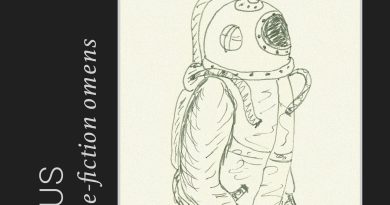
Bobby Freemont: They’re all expressions of the same feeling. It’s less about one informing the other and more about them all moving in the same direction at the same time. Art just opens the world up. My grandparents loved the work of Alexander Calder. I got to incorporate that influence into the design assets to make it more personal for me.
OSR: How do you navigate the vulnerability of writing about grief while keeping the music engaging and accessible to listeners?
Bobby Freemont: I ask myself that a lot. I don’t think I’m good at engaging people. Any successes I’ve had are mostly the music doing the heavy lifting. I know how to write, though. I put a lot of time into translating my emotions into something beautiful. I don’t let vulnerability stop me from saying things in a way that feels most authentic to me. Authenticity is accessible because underneath all the projections in the world, everyone has an authentic self. That’s the version of them I try to talk to.
OSR: Looking back at your career as a producer for Grammy-nominated and Juno-winning artists, how has that experience influenced your solo work?
Bobby Freemont: Working with my collaborators from back then taught me what good actually sounds like, and more importantly, what it feels like in the room when something’s working. But honestly, producing for other people and making my own music are very different things. The solo project is where I get to use music as a backdrop for my own poetry and perspective. The production credits opened doors and raised my standards, but this work means infinitely more to me.
OSR: What do you hope listeners feel or take away from ‘Clementine Skies’ beyond the music itself?
Bobby Freemont: There’s no one thing. I don’t even care if they know what the song’s about. I wrote it so it could sound like a break-up song too, if someone needs it to be that. Even the main repetition in the hook, “I lost my religion when I lost you”, is up to interpretation. “Losing my religion” is an old Southern saying that completely changes the song vs face value, if you take it that way. I’ve been opening up more about what songs mean to me, but I don’t want that to overshadow what they mean to you.
Many thanks to Bobby Freemont for speaking with us. Find out more about Bobby Freemont on his Instagram and Spotify.