A Chat with ILIA (18.02.26)
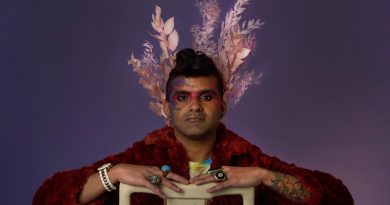
ILIA discusses reimagining ‘Gasoline’ as something darker, heavier, and more cinematic, guided by instinct rather than a fixed plan. Drawing inspiration from Halsey’s Badlands while pushing the track into new sonic territory, he reflects on balancing chaos and control in both sound and emotion. The result is a bold reinvention that captures his evolving artistic vision, rooted in experimentation, discipline, and a refusal to stand still.
OSR: Your version of ‘Gasoline’ feels more like a reinvention than a cover. What was your emotional starting point when approaching the track?
ILIA: ‘Gasoline’ was a track I’ve always admired and would come back to. Badlands, the debut record from Halsey, was hauntingly visceral and cohesive from start to finish. I knew I wanted to cover the song at some point. It felt like now was the right time. I didn’t really have a set interpretation in mind; I essentially began tracking the song, and all the pieces fell into place accordingly. I knew I wanted to make it bigger and heavier.
OSR: How did you decide which elements of the original to preserve and which to completely reshape?
ILIA: Reverting back to my answer with the previous question, I genuinely did not have those elements cemented. I took a more intuitive approach when I began recording these. I knew I wanted to retain the same overall dynamics and melodic arrangements, but introduce a more guitar-forward approach. I love guitar layers, so I certainly utilized that with my interpretation of the song. I would say the climactic breakdown that follows the first chorus is the most stark contrast to the original. That was the section of the song I knew I really wanted to elevate energetically.
OSR: The song carries a strong cinematic quality. Do you think visually when you produce and arrange your music?
ILIA: When I arrange and produce, it’s both intuitive and visual. My songs often get labelled as cinematic, and I’m always flattered that they are received that way. Cinema and music always went hand in hand for me. I never perceived them as separate entities, but rather as confounding variables. I work in film as well and direct my videos, so it’s to be expected, I suppose. I’ve always preferred more grand, epic, and cinematic execution.
OSR: The Great Deep has unfolded through multiple visuals. How important is storytelling across releases for you right now?
ILIA: Storytelling is paramount. It’s also omnipresent. Stories are always being told through multiple mediums all the time. My intention is to capture and convey stories in a more visceral, surreal, and immersive manner. Sounds, visuals, symbols, or even a simple facial expression can catalyze and awaken profoundly more than exposition.
OSR: There’s a tension in your sound between control and chaos. Is that something you consciously explore in your work?
ILIA: Ironically, I believe it to be more unconscious than conscious or premeditated, so to speak. It’s also reflective of my internal dynamics as a person, I suppose. Additionally, I come from a background where the bands I grew up listening to and playing with oscillated between chaos and clarity, angst and acceptance, heavy and euphonious.
OSR: What role does experimentation play in your creative process, and how do you know when you’ve gone far enough?
ILIA: Experimentation has always been a requisite component of all my creative undertakings. Deficient experimentation risks homogeneity. As for going far enough, I really base everything I do on whether it’s pleasing to me. It has to speak to me; if it doesn’t, I scrap it. In the words of the great Albert Camus, “Always go too far because that’s where you’ll find the truth.”
OSR: Your influences span multiple eras of alternative and industrial music. How do you translate those inspirations into something contemporary?
ILIA: My influences are palpably seeded in everything I create, though it isn’t always conscious. It’s years and years of styles, sounds, and arrangements that I grew up loving and listening to, synthesised through my creative filter. Contemporary has always been a nebulous term to me. I believe the amalgams of our influences create what we interpret as “modern” or “contemporary”. More importantly, in order to create something that truly resonates collectively, I feel the intentions need to be authentic and the inspiration pure.
OSR: This release follows a prolific creative period. What has driven this surge in output and focus?
ILIA: We’re only here for so long. I’m quite disciplined, and that work ethic bleeds into everything I choose to apply myself to. Simply put, I love to work and get things done.
OSR: How has your relationship with performance evolved as your sound has become more layered and cinematic?
ILIA: As mentioned earlier, I feel my songs have always maintained a cinematic aspect to them. As for my relationship with performance, I feel that’s always evolving, and I’m grateful for that. Growth, evolution, and re-invention have always been principles I acquiesce to.
OSR: Looking ahead, what new directions or sonic territories are you most excited to explore?
ILIA: It’s all malleable to me, and that’s what excites me the most. I’m not beholden to anyone or any confining parameters sequestering me exclusively to one sound, whether that be my own ego or some contract. I’m looking forward to exploring all of it. My deviations have pissed off fans in the past, and it’s an incontrovertible certainty that will happen again. The cardinal goal for me is to keep myself inspired and excited, and that definitely entails exploring everything.
Many thanks to ILIA for speaking with us. Find out more about ILIA on his official website, Instagram, Facebook, Spotify, and YouTube.