A Chat with Vera Weber (19.01.26)
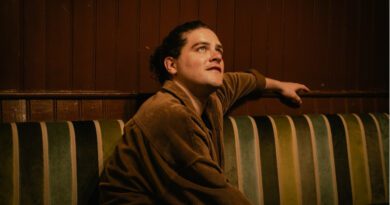
Vera Weber is a Los Angeles-based composer, pianist, vocalist, and multi-instrumentalist whose work spans film, TV, and contemporary music. A dual German-American citizen, she has scored for major European broadcasters and contributed original songs to Netflix’s Woman of the Dead (Season 2). Trained at CalArts and a former staff composer at Hans Zimmer’s Bleeding Fingers Music, Weber continues to create acclaimed music both independently and in collaboration with her father, Matthias Weber.
OSR: Congratulations on your HMMA and German Television Academy nominations! How have these recognitions influenced your approach to composing music?
Vera Weber: Being recognized by these awards is incredibly motivating. It reinforces my confidence in my own ideas and taste and gives me a sense of creative freedom, encouraging me to take risks without hesitation. I’ve never held back from creating, but this acknowledgement amplifies both the courage and joy in the process.
OSR: You work across both U.S. and European television. How do you navigate the differences in music production and storytelling between the two continents?
Vera Weber: I focus less on geography and more on the individual project. In the U.S., budgets can range from huge corporate productions to self-funded indie projects. Working with Hans Zimmer and Extreme Music, I’ve seen how corporate expectations can shape sound. Europe often offers more medium-budget work that allows creative risk, alongside smaller projects you can sustain yourself on. For me, the real luxury is developing my own voice as a film composer – something that can happen in both contexts if you choose the right projects.
OSR: Your songs often feature strong, queer narratives, like ‘Rosebud’. How do social themes inform your songwriting and scoring process?
Vera Weber: When I write a song for film, like ‘Rosebud’ or ‘You Could Be’, I aim to capture a broad, relatable human experience. I try to distil universal emotions into clear, simple words that can resonate across genders, cultures, and backgrounds. Any social or inclusive themes emerge naturally from that process – being ‘for the people’ is more a consequence of striving for universality than a conscious intention while writing.
OSR: Can you walk us through your process when writing a song for a character versus a standalone release like ‘Satan’s Advice’?
Vera Weber: ‘Satan’s Advice’ was written for a character – the end-title song for the German TV series Take the Money and Run, for which I also composed the score. It speaks from the perspective of Ruja Ignatova, the “cryptoqueen” who defrauded billions, and is my first release as lead singer of Candy as a Nun, co-written with Caleb Veazey. Even when I’m not writing for film or television, I’m still writing through a character- sometimes a version of myself, past or future. Sometimes someone I know or once knew, sometimes someone imagined entirely. In many ways, our lives are shaped by the characters we inhabit, whether those characters exist in film, fiction, or reality itself. For me, writing songs is always about exploring those perspectives, stepping into someone else’s shoes, and finding the emotional truth in their story.
OSR: Collaboration seems central to your work, especially with Caleb Veazey. How do you balance your vision with your co-composer’s input?
Vera Weber: Yes, absolutely! Collaboration has always been at the heart of my work, whether as a film composer, a band member, or now leading Candy as a Nun. At the core, it’s really about who’s steering the project. In film, that’s usually the director or producer; in music, the band leader or lead composer. Everyone brings opinions, since art is subjective, but ultimately someone has to make the final call. It helps immensely to share tastes and already be on the same wavelength, but at the end of the day, collaboration thrives when there’s both trust and clarity about leadership.
OSR: Your music blends genres, from pop to experimental textures. How do you decide which style best fits a project?
Vera Weber: For me, choosing a style is an intuitive and improvisational process. I get into the zone, and the music flows naturally, often guided by references from the project – films, music, or other art that help shape a sound palette or overall direction. Beyond that, I try to surprise myself with each new project, exploring fresh ideas rather than relying on a formula. I’ve found that emulating a sound from one project to another rarely works; the music has to grow organically from the story, the mood, and the world of each project. I love exploring variety and taking risks with sound. It’s part of what makes a project feel alive and unique. Each choice is about what serves the story best, rather than what’s familiar or expected.
OSR: Vocals play a unique role in your scores. What inspired you to integrate your own voice into suspense-driven compositions?
Vera Weber: Even though much of my film work is electronic, I try to incorporate live instruments as much as possible. They give the music life and soul in a way that nothing else can. Vocals have a versatility that works across genres, and my voice has a distinct texture, partly because I am not formally trained. Its rawness and originality have become a signature of my sound world. At this point, originality is the most valuable thing anyone can bring to a project, and for me, that comes through my voice and my instinct for writing vocal lines that feel alive and personal.
OSR: Which composer or artist has had the most influence on your cinematic and contemporary music style?
Vera Weber: I’m inspired less by sound than by philosophy – artists who take risks, embrace versatility, and remain unapologetically themselves. Figures like Kanye West, Frank Zappa, Yoko Ono, St. Vincent, Prince, Björk, Caroline Shaw, John Cage, Hildegard von Bingen, SOPHIE, and many others influence me for their fearlessness and originality. To me, real art pushes boundaries and genres, and while it is an incredibly difficult and ambitious goal, I hope to do the same in this life.
OSR: With multiple projects releasing almost simultaneously, how do you maintain your creative energy and avoid burnout?
Vera Weber: Besides being dependent on coffee and sunshine for a baseline of happiness, I recharge in nature, drive my convertible, spend time with friends, cuddle my cats, practice harpsichord, swim, and follow an Ayurvedic lifestyle. Family is very important to me – weekly homemade dinners in Los Angeles, visits to Freiburg, or Caleb’s family in Texas. Good food, good people, and home always reset me and keep me energized.
OSR: Looking forward, are there any dream projects or collaborations you hope to tackle in the next few years?
Vera Weber: I want to continue expanding my work across sound and image, balancing the release of my own records—including Candy as a Nun—with composing for film and series. I’m drawn to darker, mood-driven projects – period dramas, thrillers, suspense, horror, crime, and youthful pop-art indie stories – ideally collaborating with directors who bring vision, kindness, and refined taste. I also hope to return to contemporary classical music, alongside analog photography and 16mm filmmaking, blending these explorations with songwriting and collaborations. I aim to sing more, while balancing my life as a musician and composer with more face-to-face interactions and less digital time. Ultimately, I’m excited by projects that let me develop a distinctive voice while exploring creativity across mediums, where personal expression and collaboration inspire one another.
Many thanks to Vera Weber for speaking with us. Find out more about Vera Weber on her Instagram, Facebook, Spotify, and official website.